

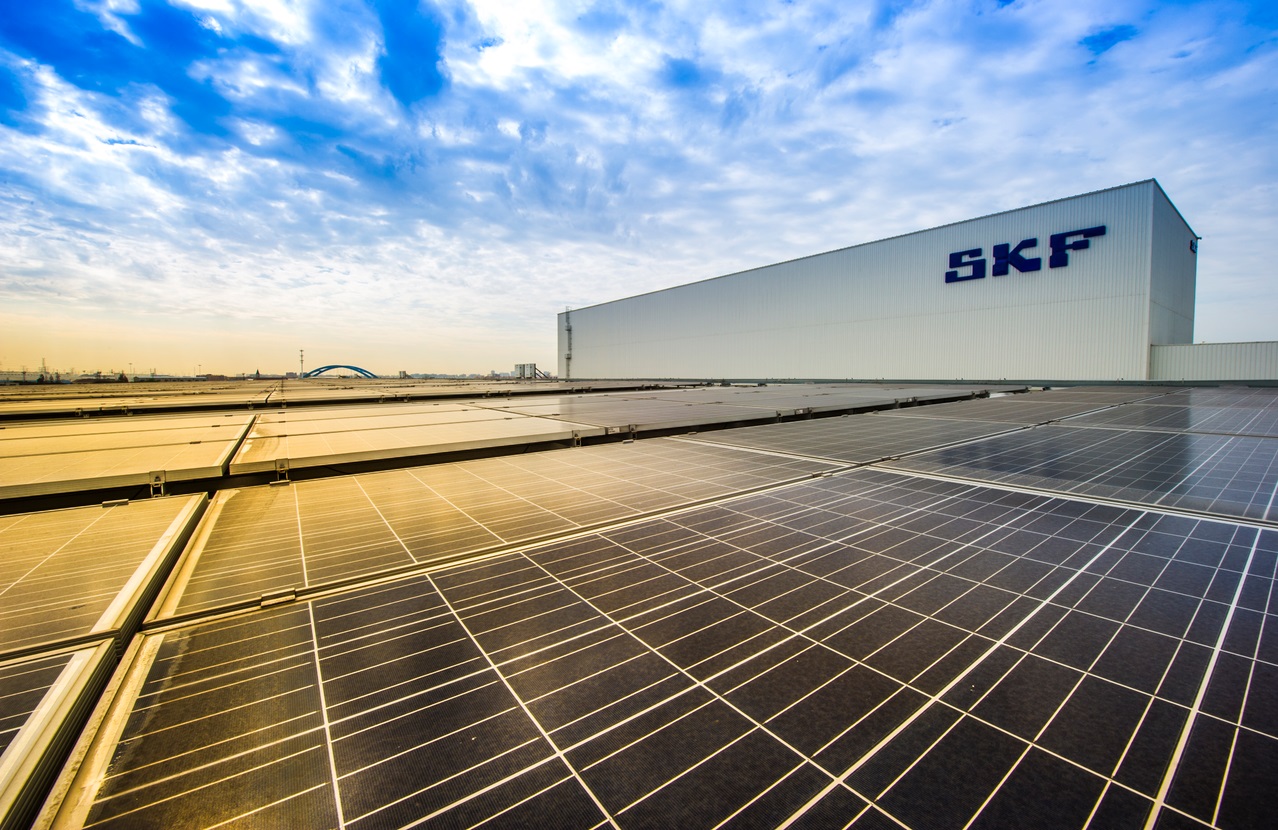
The Swedish Group SKF is strengthening its commitment to sustainability, supporting customers in achieving ESG (environmental, social, and governance) goals through three strategic pillars: efficiency, innovation, and circular economy.
The first pillar focuses on efficiency: SKF optimizes its products to reduce energy consumption and extend machinery lifespan, minimizing waste. The second pillar emphasizes innovation with a circular approach, featuring solutions such as SKF RecondOil, for industrial oil regeneration, Bearing Remanufacturing, which refurbishes bearings, and the Infinium series, designed for circular performance using laser cladding technology. The third pillar involves supporting the transition to clean energy and low-carbon technologies, with specialized units developing cleantech solutions.
On the regulatory front, the Science Based Targets initiative has approved SKF’s goal of net-zero GHG emissions by 2050, along with significant reductions in Scope 1, 2, and 3 emissions by 2030. For the third consecutive year, the Group earned an “A” rating in the Climate Change category from CDP, confirming internationally recognized environmental performance.
In terms of circular economy, SKF Remanufacturing allows large bearings to be refurbished up to two times, reducing lead times, costs (by up to 50%), and emissions (by up to 90%). Meanwhile, RecondOil can significantly extend oil change intervals, achieving up to a 96% reduction in CO2 emissions thanks to patented chemical/mechanical filtration technology.
A concrete example of green transition is SKF’s Massa plant, the Group’s first Italian site fully free from fossil fuels. The introduction of heat pumps has eliminated gas consumption and reduced annual CO2 emissions by 118 tons, improving energy efficiency and maintenance cost optimization.
Through these initiatives, SKF confirms its role as a leader in industrial sustainability, combining technological innovation, circular economy practices, and emissions reduction to create a positive impact on customers, the market, and the environment.