

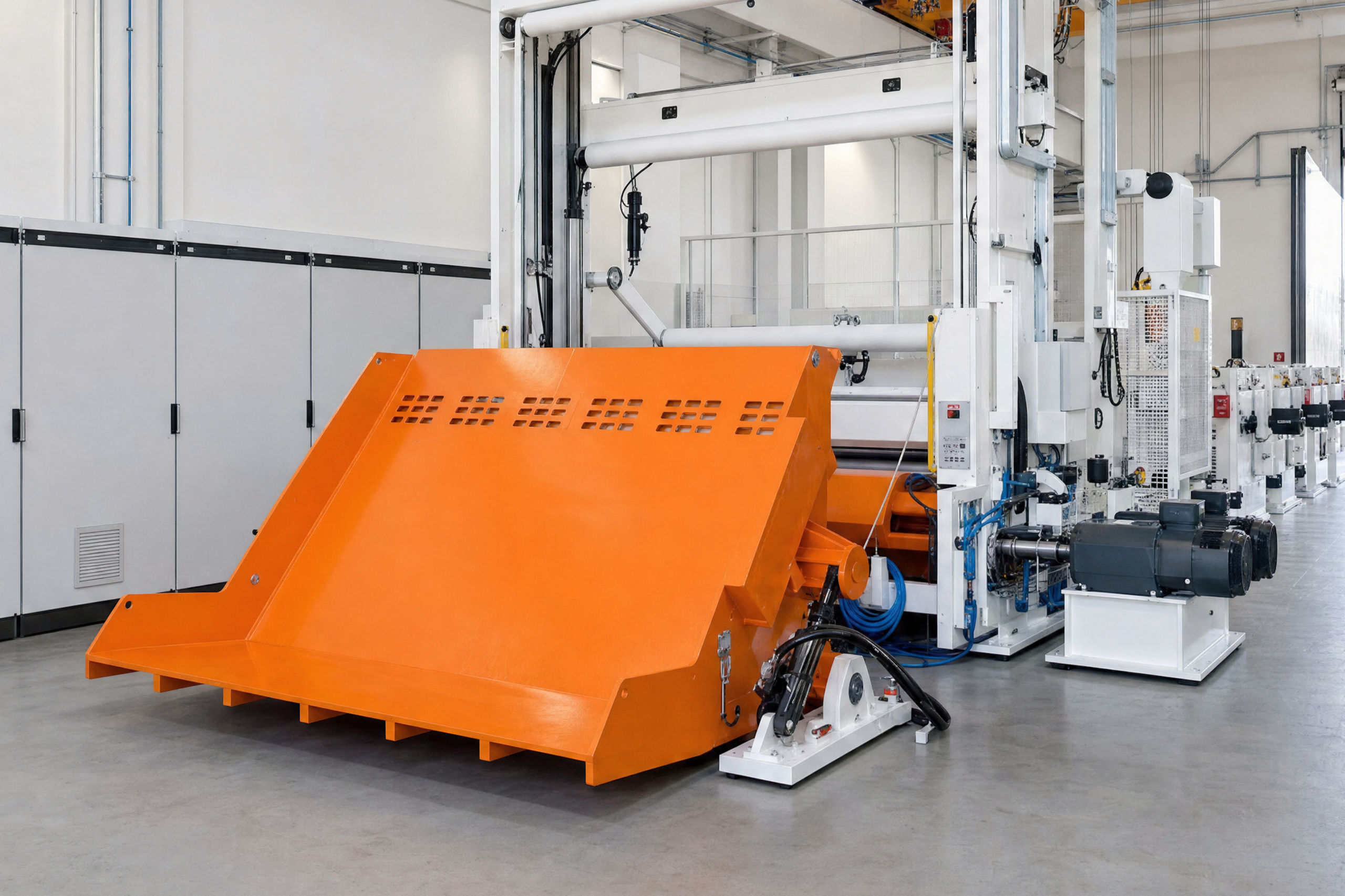
Tecno Paper is developing an AI-based system that analyses rewinding data in real time to anticipate process anomalies, prevent web breaks and optimise production efficiency. Built on Edge AI architecture, the solution supports operators with predictive insights and tailored machine settings.
In a paper mill, rewinding has a direct impact on productivity and final reel quality. Web breaks, lengthy setups and defective reels can lead to downtime, waste and lost production capacity. Experienced operators play a key role in recognising anomalies before they become critical.
Tecno Paper is developing a new AI-based system designed to analyse rewinding data directly on the machine. Its aim is to anticipate risk conditions, support operators and provide useful information for production management.
Artificial Intelligence directly on the machine
Based on an Edge AI architecture, the system processes data locally and in real time, without relying on an external cloud or Internet connection. This reduces latency and keeps production data within the mill’s infrastructure.
Its functions include dynamic tension monitoring, paper recognition and setpoint recommendations, automatic efficiency calculation and maintenance support.
Anticipating web breaks
Web stability depends on several interacting variables, including motor torque, braking systems, paper elasticity and unwinding speed. By analysing load-cell readings, oscillation trends and process data, the system identifies conditions associated with an increased risk of web breaks.
When a potential risk is detected, an alarm alerts the operator, allowing corrective action before conditions become critical. The aim is to improve stability without permanently reducing operating speed.
Parameters tailored to the paper
Different paper grades and formats require different winding settings. Classification algorithms analyse incoming paper characteristics and recommend suitable setpoints and winding curves.
At each changeover, operators receive settings tailored to the product, helping achieve an appropriate reel hardness profile from start-up, reduce setup trials and limit defects such as telescoping and core crushing.
Data, efficiency and technical know-how
Continuous signal analysis identifies machine states without requiring operators to enter reason codes manually. OEE can therefore be calculated in real time and compared across shifts and production runs, helping management understand where efficiency is lost.