

The Tech&Innovation Summit offers a vision that goes beyond the technical and operational dimension: a space for strategic discussion in which today’s industrial choices have a direct impact on the stability and sustainability of the entire ecosystem.
The factors that enable major industrial companies to achieve their objectives and become a benchmark not only within their own field but also at sector level are often the subject of discussion. The answer cannot be univocal, but clearly lies in the ability to interpret change in order to steer it. Among these companies, SKF demonstrates how, through professionalism, dedication and intuition, the future is not an external element resulting from a particular set of circumstances; on the contrary, the future can emerge from the way in which business and production processes are designed, developed and brought into operation.
Aware of the guiding role it has acquired over time, since 2024 the Swedish company has decided to share some of its advanced engineering and digital innovation solutions through the Tech&Innovation Summit: an annual event that we had the pleasure of attending, set within a global context in which the management of production and energy systems has now become an unavoidable priority from both an industrial and environmental perspective.
The Group’s positioning and innovations: less friction, fewer losses
On 18 June, via live streaming, SKF inaugurated the summit “Closing the energy efficiency gap”: a theme that highlights how essential energy availability is in supporting manufacturing development. The ability to optimize the relationship between useful energy produced and related consumption becomes crucial, achieving the greatest possible convergence between strategic objectives and operational execution results.
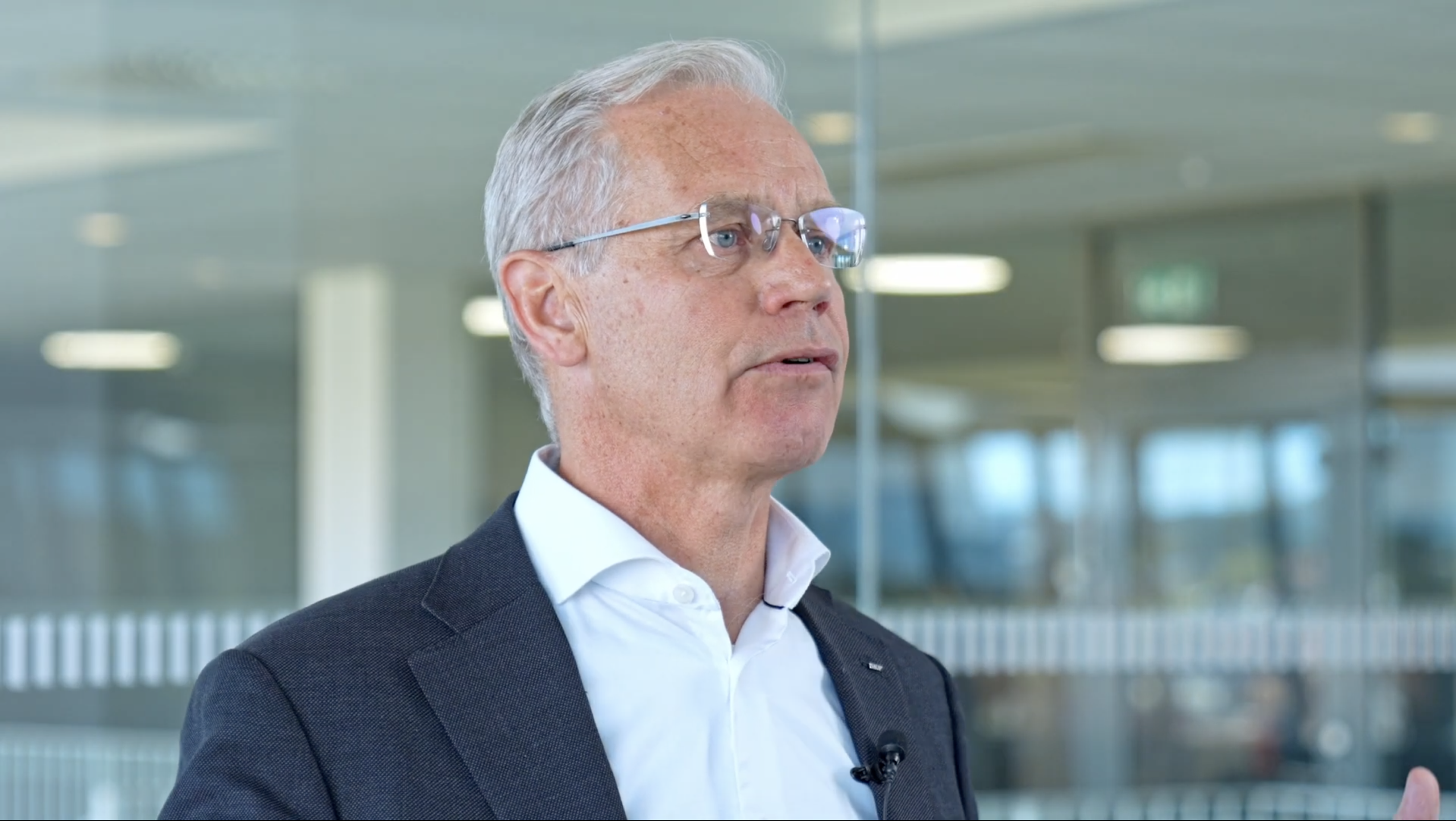
It is in these terms that Rickard Gustafson, CEO of SKF, introduces key concepts that apply to a global production system today subject, more than ever, to dual pressure: the high performance required of industrial infrastructure is accompanied by the increasingly important value attributed to energy production. In such a context, an unexpected machine shutdown can have significant economic and environmental consequences, an eventuality that can be avoided by limiting specific consumption and maintaining maximum stability of the operating system.
Gustafson clearly outlines the picture, integrating contextual factors, operational strategies and final objectives. In a global market in which energy acts as a new, highly volatile currency, strongly influenced by widespread geopolitical fragmentation, digital acceleration, attention to sustainability and production reliability become necessary counterbalances to keep the system in equilibrium. To achieve this, design and operational choices and a constant commitment to research and the development of new solutions are fundamental, guided by careful analysis and interpretation of operating systems and by advanced asset management. The results can thus translate into superior performance and maximum reliability and credibility, through the achievement of a balance based on stability and efficiency and on a high capacity for risk mitigation.
The first practical example of SKF’s approach is presented by Lars Stierna, Product Line Manager Magnetic Bearings, and is closely linked to the expansion of data centers for AI. These infrastructures have a considerable impact in themselves, accounting for approximately 1.5% of global electricity consumption and expected to double by 2030, with almost 40% attributable to cooling systems, which are vital for operational continuity. SKF has developed a solution for chiller systems, increasing their efficiency by reducing the required power and dissipated energy. A traditionally designed machine operates through rotating elements that generate a high amount of friction due to physical contact between components, causing heat and wear and requiring constant lubrication and maintenance. The use of a magnetic bearing can overcome this problem: an advanced system based on the interaction of electromagnets, position sensors and a controller keeps the shaft suspended at a millimetric distance from the ring, avoiding contact while still allowing operation. In this way, lubrication is no longer necessary and the system benefits from a significant reduction in wear, vibration and noise. The advantage lies not only in high performance, supported by greater operating speed and reduced energy consumption, but also in real-time monitoring through data extracted from integrated sensors, making it possible to intervene without having to shut down the plant.
Another significant innovation is represented by the patented hybrid ceramic bearings, frequently used as rotating elements inside electric motors, which are widely employed in the industrial sector and account for as much as 72% of automated systems. The use of a lighter material, silicon nitride, results in lower resistance and therefore lower friction and reduced energy losses; consequently, the service life of the motor is also extended and the need for maintenance becomes less frequent. Ceramic balls are also capable of eliminating electrical erosion caused by frequency variations in systems equipped with VFD (Variable Frequency Drive) systems based on variable-frequency inverters.
In both cases, technological advances aim to ensure an almost perpetual operation of the system, which can be further optimized through careful planning of preventive measures and maintenance interventions. In this regard, SKF has codified specific procedures that integrate advanced digital technologies to keep the production system running even during maintenance operations, with the possibility of removing critical components to refurbish them and subsequently reinstall them in the same equipment.
SKF’s solutions for the pulp & paper industry
The paper industry is particularly interested in the Swedish company’s solutions, especially for optimizing production cycles and maintenance strategies without machine downtime. In this regard, Marcus Andersson, Global Manager Laser Metal Deposition, reviewed the advantages of the innovative technology specifically designed for the paper industry and already presented at the previous summit in December 2024: Infinium bearings. These components use a multi-material mixture largely recovered from the recycling of discarded bearings, used both for the base ring and for the functional surfaces. The distinctive feature of this production method is that the component is manufactured by adding material to the base core of the functional surfaces, which is made of highly resistant stainless steel; this process can be repeated multiple times when the component is refurbished, making the part almost indefinitely reusable. In this way, the time and costs devoted to maintenance operations are reduced, while polluting and greenhouse-gas emissions are also minimized.
The application of Infinium bearings is demonstrated by the case study of the Billerud paper mill at the Skärblacka site in Sweden, where installation of the first 80 units has already begun, with the aim of completing the plan by 2027. The plant aims to extend the bearing replacement interval to 15 or 20 years in order to minimize costly maintenance and replacement operations during the limited scheduled downtime windows.
Mechanical hardware innovation is complemented by innovation in digital infrastructure. In this area, Artificial Intelligence proves decisive, simplifying the analysis of productivity data. Turning data into concrete actions and supporting predictive performance monitoring is the focus of the presentations by Emre Onbicak and Daniel de Andrade Moreira: the fundamental role of sensors in collecting useful measurements and parameters is reflected in the objectives of safety and stability of the production system. From this perspective, redundancy is essential to ensure operational continuity and reliability. The use of Artificial Intelligence thus becomes a strategic tool for defining priorities not only in terms of efficiency, but also of prevention and safety.
Innovation and decision-making: pillars for building the future
The legacy of the Tech&Innovation Summit 2026 lies not so much in the enthusiasm generated by cutting-edge prototypes as in the approach and mindset that made their creation possible. As Rickard Gustafson recalled, it is the functioning of the entire system, through a synergistic relationship between its individual components, that makes it possible to achieve stability and efficiency.
A complex challenge, to be addressed not only from the perspective of engineering decisions, from design through commissioning, but also and above all from a managerial standpoint, in terms of the ability to steer the company’s vision and global impact. In this scenario, defining priorities and making strategic decisions become the true driving force behind the operation and evolution of plants. The choice made today influences tomorrow: for this reason, awareness and foresight are the true assets to be managed and enhanced.